MY CHILD HAS AUTISM, ADHD OR ADDITIONAL NEEDS: CAN THEY STILL TRAIN?
Many parents contact us because their child has autism, ADHD or additional needs and they are unsure whether combat sports will be the right environment for them. The honest answer is that every child is different, but many children can benefit hugely from routine, structure, consistency and clear expectations.
At Praetorian MMA, we do not coach diagnoses. We coach individuals. That means communication between parents and coaches is important so we can understand the child in front of us and support them in the right way.
If you are still deciding whether your child is ready, you may also find A Parent's Guide To Starting Martial Arts, How Old Does My Child Need To Be To Start Martial Arts? and Why We Encourage Parents To Get Involved useful.
EVERY CHILD IS DIFFERENT
Two children with the same diagnosis can behave, learn and respond completely differently. One child may need more time to settle. Another may need very clear instructions. Another may struggle with noise, change, frustration or working with different partners.
That is why we avoid making promises before we have met the child. The aim is to understand what they need, how they respond and whether the training environment is right for them.
A diagnosis can help parents explain what may support their child, but it does not tell the full story. We need to understand the individual child, their triggers, their confidence, their communication style and what helps them feel safe enough to try.
ROUTINE AND CONSISTENCY MATTER
For many children, routine is one of the most important parts of development. Turning up regularly, seeing familiar faces, hearing clear instructions and slowly understanding the class structure can make a huge difference.
Progress is rarely built from one perfect lesson. It is built from repeated exposure, patience and consistency. Missing long periods can undo the hard work that has gone into helping a child settle, trust the environment and feel confident enough to take part.
This does not mean forcing a child through every bad day. It means understanding that growth often comes from gently working through difficult moments rather than avoiding them completely.
This is similar to what we explain in My Child Is Shy: Will Martial Arts Help?. Confidence and routine are usually built through many small experiences, not one perfect class.
THE SIX TO TWELVE WEEK DIP
Many children settle well at first because everything is new. They enjoy the novelty, meet the coaches and begin recognising the routine.
Then, around six to twelve weeks, some children hit a dip. The novelty has worn off, the training feels harder and they may begin resisting attendance or doubting themselves.
For children with autism, ADHD or additional needs, this stage can be especially important. It does not always mean training is wrong for them. It may simply mean they need support, patience and consistency while the habit becomes stronger.
You can read more about this pattern in Why Most People Quit Combat Sports.
MISTAKES ARE PART OF LEARNING
One of the biggest lessons we try to teach is that it is okay to get things wrong. Mistakes are not failure. They are part of learning.
Some children find this difficult at first. They may become frustrated, embarrassed or upset when something does not go the way they expected. That is where coaching, patience and parental support matter.
The aim is to help children understand that training is a place where they are allowed to try, make mistakes, learn and improve without needing to be perfect.
CLEAR INSTRUCTIONS AND POSITIVE EXPECTATIONS
Children often do well when expectations are clear. They need to know what is happening, what is expected of them and how they can succeed.
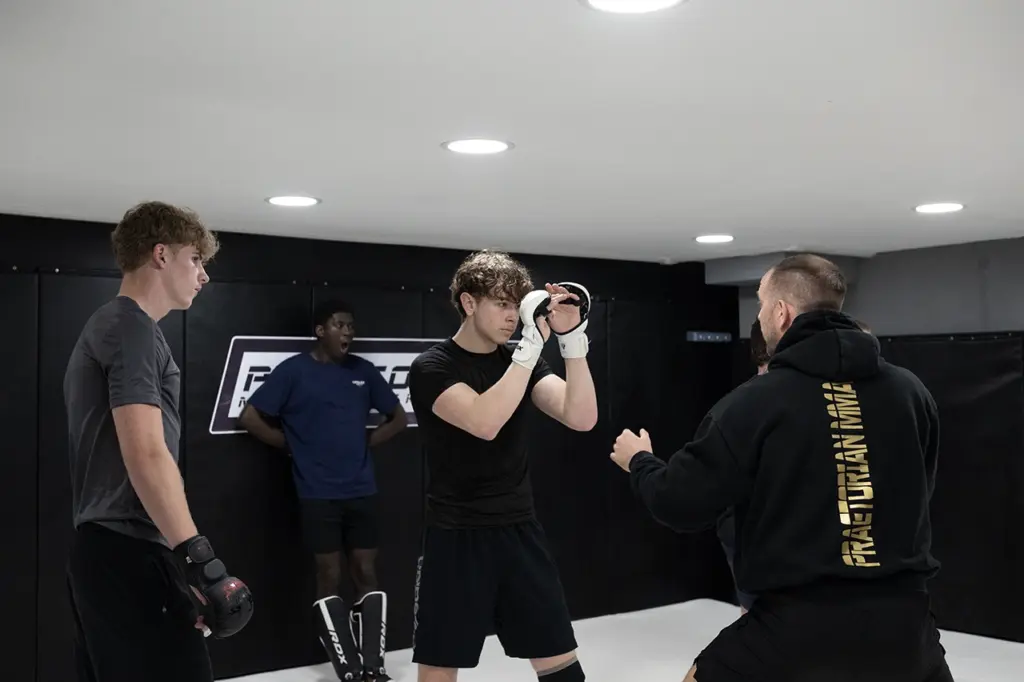
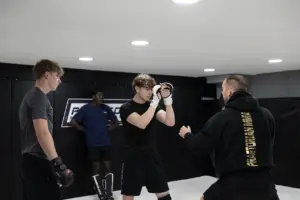
Our coaches work to create structure inside the class. That structure can help children build listening skills, focus, patience and confidence over time.
Coaches such as Josh Woodbourne, Nathan Johnstone, Martyn Styler and Christian Bloomfield all work with younger members across different parts of the timetable.
You can learn more about the wider coaching team here: Meet The Team.
PARENTS PLAY A KEY ROLE
Parent involvement can be extremely important, especially in the early stages. You know your child better than anyone. You know what helps, what makes things harder and what signs to look out for when they are becoming tired, overwhelmed or frustrated.
At Praetorian MMA, we encourage parents to stay involved in the process. That may mean speaking to the coach before class, helping younger children settle, supporting routines at home or simply being consistent with attendance.
You can read more about this here: Why We Encourage Parents To Get Involved.
JACK'S STORY
One of the most powerful examples we have seen at Praetorian MMA is Jack Cowley.
Jack was born with cerebral palsy and joined us at age 15 after recently having surgery to straighten his foot. He joined because he had been bullied.
When Jack started, he had clear physical limitations. Over time, through patience, coaching and consistency, he learned to walk better, run better and move with more confidence. He still has limitations, but the journey he has been on is incredible.
Jack has made massive changes since joining Praetorian MMA. He has competed in the ring on a show, wants to compete again in the future and also wants to qualify as an MMA referee.
That is what we mean when we talk about development. Not perfection. Not comparison. Growth.
JOSH'S STORY
Another example is Josh Woodbourne.
Josh was born with Myalgic Encephalomyelitis, is registered disabled and was also bullied when he was younger. Through years of consistency, hard work and resilience, Josh became a coach at Praetorian MMA and was ranked number one in the UK in his division last year.
Josh's story shows what can happen when someone is given the right environment, the right support and enough time to grow.
BEN'S STORY
Another example is Ben Hudson Wilde.
Ben joined the club at 15. At that stage, he was overweight, socially awkward, struggling with alcohol, had used drugs and did not really fit in with the people around him.
Training gave him structure, routine, standards and people to look up to. Over time, through consistency and support, he became a very different person from the teenager who first walked through the door.
Today, Ben is a respected coach and role model for younger members. His story is another reminder that progress is not always about talent. Sometimes it is about finding the right environment and staying in it long enough to change.
WE CANNOT SHARE EVERY STORY
For safeguarding reasons, there are some young people currently training at Praetorian MMA whose stories we cannot publicly share.
What we can say is that we have seen children arrive nervous, unsure, lacking confidence or struggling in different ways and become almost unrecognisable over time. Some now compete. Some win. Some simply carry themselves with far more confidence than when they first arrived.
Those changes rarely happen overnight. They happen through routine, consistency, coaching, parental support and time.
COMPETITION CAN HELP, BUT IT IS NOT REQUIRED
Some children with additional needs eventually enjoy competing. Others never compete and still gain huge benefits from training.
Competition can teach preparation, resilience and emotional control, but it should be approached carefully and at the right time for the individual child.
You can read more about our approach here: Why We Encourage Competition At Praetorian MMA.
COMBAT SPORTS ARE NOT THERAPY
It is important to be clear. Combat sports are not therapy, and we are not claiming to treat autism, ADHD or any other condition.
What we can offer is structure, coaching, routine, physical activity, positive role models, clear expectations and a supportive environment where children can develop at their own pace.
For many children, that can be incredibly valuable.
WHERE SHOULD MY CHILD START?
If your child has autism, ADHD or additional needs, the best first step is to speak to us honestly. Tell us what helps, what does not help and what you are hoping your child will gain from training.
You can explore our youth pathways and class pages here:
You may also find these articles useful: My Child Is Shy: Will Martial Arts Help?, Why We Encourage Parents To Get Involved and A Parent's Guide To Starting Martial Arts.
The goal is not to place limits on a child before they start. The goal is to understand the child, create structure, build consistency and help them grow into a stronger, more confident version of themselves.