GI VS NOGI BJJ: WHAT'S THE DIFFERENCE?
One of the most common questions we get asked at Praetorian MMA is whether someone should train Gi BJJ or NoGi BJJ. The truth is there is no right or wrong answer, but there are differences and understanding those differences will help you make better decisions about your training.
For us, the biggest difference is not the uniform. It is the coach, the atmosphere, the people in the room and what you personally want from your training. The best way to understand that is to experience both and learn from different people.
If you are completely new to Brazilian Jiu Jitsu, we recommend reading Getting Started at Praetorian MMA and Your First Class at Praetorian MMA before deciding which route is right for you.
THE REAL DIFFERENCE
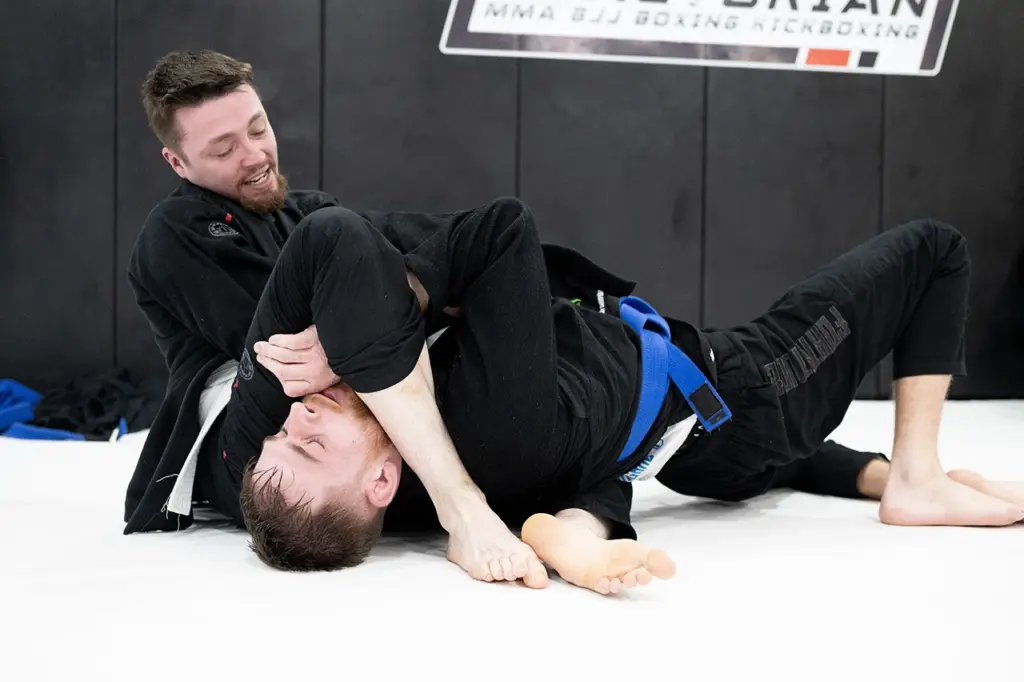
Gi BJJ uses the traditional jacket and trousers. The additional grips slow things down, create more control and force you to become more technical. Escaping bad positions becomes harder, which means details matter.
NoGi removes those grips. The pace generally becomes faster, movement becomes more dynamic and scrambling plays a much bigger role. Many people find NoGi more exciting because there is often more movement and fewer situations where somebody can hold you in place using your clothing.
Neither is better. They simply develop different skills.
LEARN FROM DIFFERENT COACHES
One of the advantages of training at Praetorian MMA is access to different coaches with different experiences, competitive backgrounds and teaching styles.
Rob Goodson brings around twenty years of Brazilian Jiu Jitsu and MMA experience. Rob's classes focus heavily on pressure, control, fundamentals and understanding why techniques work.
Nathan Johnstone is a BJJ Black Belt and former MMA competitor. Nathan's teaching style is highly technical and heavily influenced by modern NoGi grappling. Nathan's development was shaped through the wider BJJ community connected to Odyssey Combat Hub.
Josh Woodbourne works extensively with younger students and has an excellent ability to break techniques down into simple steps and concepts that are easy to understand.
Martyn Styler teaches both Gi and NoGi classes and focuses heavily on helping students understand how Brazilian Jiu Jitsu connects with the wider world of combat sports.
The more people you learn from, the more complete your understanding becomes. You can learn more about the coaching team here: Meet The Team.
WHY GI STILL MATTERS
Many people are naturally drawn towards NoGi because it looks faster and often resembles MMA more closely. However, Gi training develops patience, control, grip fighting, defence and technical problem solving.
The Gi forces you to slow down, solve problems and pay attention to details that are often easier to overlook when everything is moving quickly.
If belt progression and recognised BJJ rank matter to you, Gi training is particularly important. Whilst NoGi develops outstanding grappling ability, belts and rank originate from the Gi system. Students interested in progressing through recognised BJJ grades should strongly consider keeping at least some Gi training in their schedule.
You can learn more about our Gi programme here: Brazilian Jiu Jitsu Classes.
WHY NOGI CONTINUES TO GROW
NoGi has exploded in popularity over recent years. The faster pace, wrestling influence and direct crossover into MMA make it attractive to many students.
For many newer students, NoGi can feel easier to relate to because the clothing is familiar and the movement often looks more athletic and dynamic.
You can learn more about our NoGi programme here: NoGi BJJ Classes.
THE ROB GOODSON LESSON
One of the best examples of why both styles matter comes from Rob Goodson.
When Rob first started training, he spent time in the Gi before becoming heavily involved in MMA and NoGi. At one stage, he did not put the Gi back on for around nine years.
Today, Rob's knowledge goes beyond many brown belts and even many black belts, but he would be the first to admit that if he could go back, he would probably have spent more time wearing the Gi.
The lesson is simple. You may not care about stripes, belts or gradings when you first start, but many people care a lot more about them later. What seems unimportant during your first year can become very important after five or ten years of training.
Even one Gi class per week can make a huge difference over time. It allows you to keep progressing through the grading system whilst still enjoying the speed and movement of NoGi training.
Many students who begin training purely for fitness eventually discover they enjoy grading, attending seminars and even competing. Your goals often evolve as your journey develops.
GI, NOGI AND MMA
If your goal is MMA, then NoGi should absolutely form part of your training. Scrambling, wrestling, transitions and movement all transfer directly into mixed martial arts.
However, Gi still provides huge value. Control, patience, grips and technical understanding all contribute towards becoming a more complete grappler and combat sports athlete.
You can learn more about our MMA programme here: MMA Classes at Praetorian MMA.
WHAT ABOUT CHILDREN AND TEENS?
For younger students, we generally encourage exposure to both Gi and NoGi training where possible. Each develops different skills and gives children a broader understanding of Brazilian Jiu Jitsu.
Gi develops patience, discipline and technical detail. NoGi develops movement, reactions and athletic awareness. Together they help create more rounded grapplers.
You can learn more about our youth programme here: Kids & Teens BJJ, Kids Pathway and Teen Pathway.
WHAT ABOUT SELF DEFENCE?
One of the biggest arguments against Gi training is that nobody wears a Gi in a street fight.
That is true, but people do wear hoodies, jackets, coats and t-shirts. Gi teaches control. NoGi teaches movement. Knowledge from both makes you a more complete grappler.
If you are interested in the wider discussion around practical training and effectiveness, read: Martial Arts vs Combat Sports: What's The Difference?
RELATED READING
Not sure where to begin? These articles may help:
- Getting Started at Praetorian MMA
- Your First Class at Praetorian MMA
- BJJ, MMA or Kickboxing: Which Is Right For You?
- Why Most People Quit Combat Sports
READY TO EXPERIENCE BOTH?
If you are ready to start training, the best option is to experience the classes for yourself and see which coaches, training partners and style of training you connect with.
The goal is not to decide from behind a screen. Train with the coaches, experience the classes and discover what works best for you.